Andrew Synnott - La Cucina
Gioachino Rossini - Adina
Wexford Festival Opera, 2019
Michele Spotti, Rosetta Cucchi, Máire Flavin, Manuel Amati, Emmanuel Franco, Sheldon Baxter, Luca Nucera, Rachel Kelly, Levy Sekgapane, Daniele Antonangeli
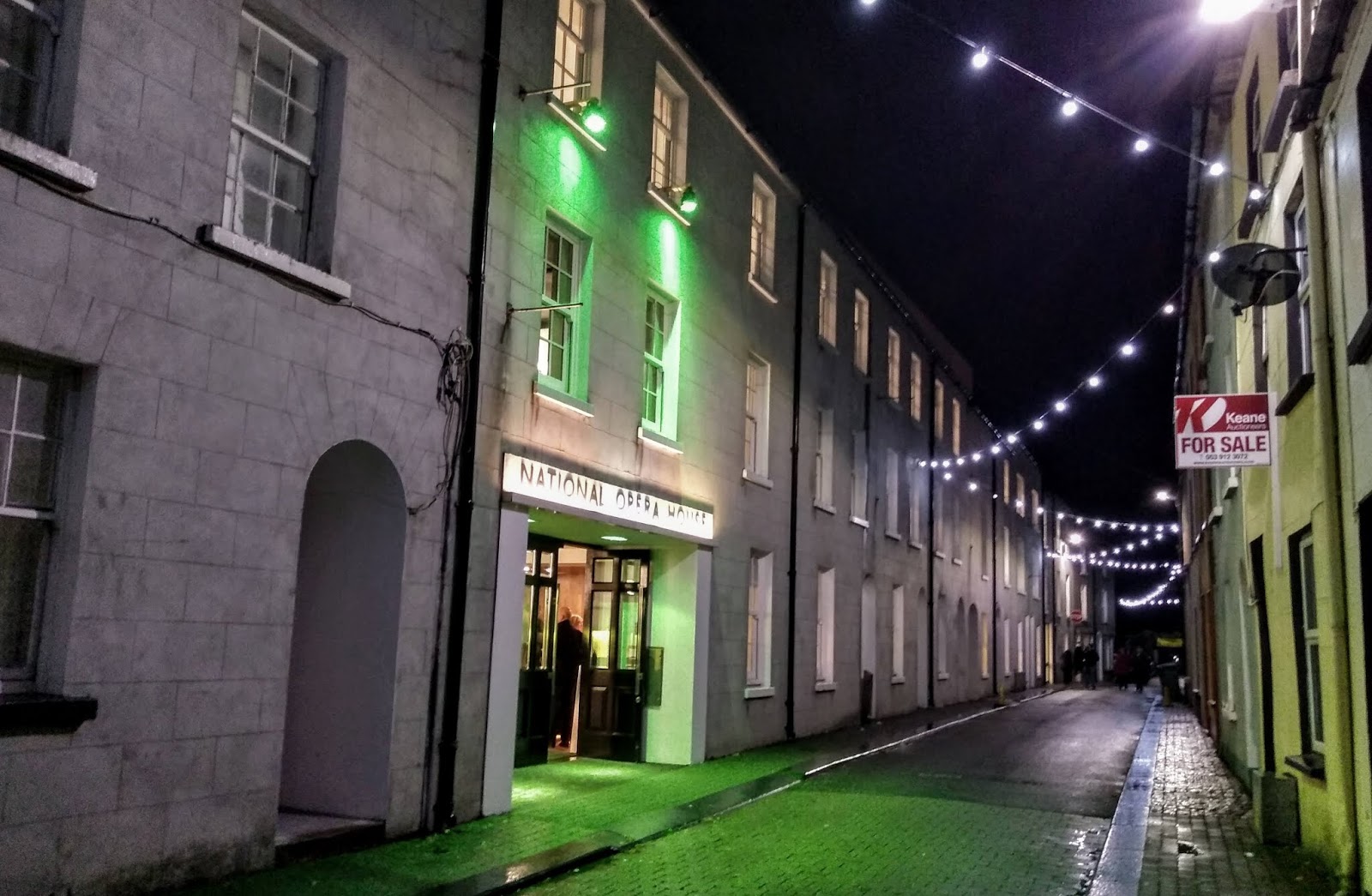
National Opera House, Wexford - 31 October 2019
With the spotlight is on the older undiscovered works of mostly 19th and early 20th century at Wexford Festival Opera, there was a danger that a new work, the first new Irish opera composition ever presented there, might not get sufficient recognition or attention. La Cucina however turned out to be one of the great surprises of the festival. That's perhaps not entirely unexpected, as Andrew Synnott had demonstrated wonderful dramatic writing for Dubliners at the 2017 ShortWorks programme. Although La Cucina is also a shorter work, modest in its ambition to serve only as a starter for Rossini as the main show, it's a work of great quality in its own right.

Rossini's Adina is the inspiration but so too it appears is the experience of the new director of the festival Rosetta Cucchi who wrote the libretto for La Cucina. In a way, the work is a tribute to opera, as she explains in her programme notes, the challenges of putting on an opera like making a cake, getting all the ingredients and the timing right. What's also apparent however is that the work also serves to bake a cake as a tribute to the departing director of the Wexford Festival Opera David Agler, under whom Cucchi served as assistant for much of that period.
That's very much reflected in the subject, a new apprentice hoping to learn from the master, inevitably makes some mistakes along the way, but the maestro too comes to realise when the time has come to put aside his ways and let his team grow and develop their own ideas and forge their own direction. That could come across as heavy-handed but the piece is scored and staged wonderfully, allowing a lovely variety of events, mishaps and expressions that work on a number of levels. Whether in the workplace, whether in recognition of the situation to a cookery programme fan - the maestro here more fearsome than Gordon Ramsey - or even in everyday situations, there's a recognisable and universal application here.

It's important that we have a meaningful libretto, and with that essential ingredient you have the makings of a wonderful confection. Andrew Synnott's score brings it vividly to life, in the process perhaps even reflecting the Festival's underlying ethos of celebrating the history of opera. In terms of expression, it's very much latter day Puccini in vibrancy, drama and situation, and I'm sure La Cucina would work perfectly alongside one of the parts of Il Trittico, having very much the same tone as that comic masterpiece Gianni Schicchi. There's a touch of Richard Strauss too in the vocal scoring, Máire Flavin gifted with the creation of the role of the sous-chef Bianca that she more than lives up to.
Written as a complementary one-act opera for Rossini's Adina, the connection established here is that the cake being baked in La Cucina is the important wedding cake being baked might well have been for Adina and her forthcoming marriage to the Caliph. La Cucina set Adina up in another vital way and that was the spirit of the production. Adina, it has to be said, is for the most part Rossini by numbers, but as La Cucina notes in its closing observations, quoting Rossini, what matters is that you make the most of life, and if you don't you're crazy.

Wexford played up the exaggeration of life and its crazy idea of a plot in their production of Adina. Essentially there aren't any greater complications or roles or types than you find in L'Inganno Felice (another short given a reduced performance outing at the festival) but Rossini is eminently scalable, reduced or enlarged, and Wexford successfully went for it big time. The previous baking a cake theme also effectively pushes aside any of the dodgy Orientalism that Rossini was fond of using for comic romantic complications in his operas.
Designed by Tiziano Santi, the stage set is a huge cake that contains the lower quarters of the Caliph, the middle section holding Adina's room and the upper level with real life-size wedding cake figures, is used for other purposes, such as the jailing of Selimo when he tries to spirit his love Adina away from a fateful marriage to the Caliph (none of them yet knowing that the Caliph turns out to actually be Adina's father!)

So Adina is pretty much by-the-numbers material, Rossini providing the usual insistent rhythms and rapid-fire singing with some challenging vocal lines for Adina and Selimo, challenges that are capably met by Rachel Kelly and Levy Sekgapane who ring out those high notes beautifully. Musically there's a little more sophistication in the arrangements that is immediately apparent, although there is still some recitative here, Michele Spotti keeping the urgency and lightness of the plotting in place.
Directing both pieces, Rosetta Cucchi's production was certainly impressive in capturing the whole tone of the Rossini philosophy of living life to the full. The stage was filled with extras, all bringing little side-shows of humour, Alfredo the master chef ever present to emphasise the connections between Adina and La Cucina. Perhaps a little too much going on for a relatively simple piece, but life's a big cake and you just have to eat it, and why not add some special icing sugar on top. You can't get too much of that.


Links: Wexford Festival Opera
Georges Bizet - Le Docteur Miracle
Wexford Festival Opera, 2019
Andrew Synnott, Roberto Recchia, Lizzie Holmes, Kasia Balejko, Guy Elliott, Simon Mechlinski
Clayton White's Hotel, Wexford - 31 October 2019
The libretto and situation for Doctor Miracle, as you could tell from a cursory glance through the short synopsis of Bizet's one-act opera, is very silly indeed. Silliness however should be no hindrance to producing a clever and skillful comic opera. Offenbach excelled at it, Bizet too by all accounts, but we haven't had the same opportunities to sample them, Bizet remaining basically unknown in the wider opera world outside of the ubiquitous Carmen and, if you're lucky, Les Pecheurs du Perles.
If Doctor Miracle is anything to go by you're not missing any great lost comic masterpiece, but like Offenbach's lesser known works that I've seen, La Grande-Duchesse de Gérolstein, Les Brigandes, or Chabrier's L'Etoile, if played right it has considerable potential to be hugely entertaining. Filled with silly situations involving disguises, impersonation and unlikely twists of plot, there's only one way to play such material and that's play up the silliness factor.

In Le Docteur Miracle Laurette is in love with an army captain Silvio but her magistrate father has an objection to her marrying a soldier. Undeterred, Silvio first disguises himself as a quack remedy seller Dr Miracle, selling potions out on the street as a means to surreptitiously (i.e. conspicuously) serenade Laurette. Then he disguises himself as handyman Pasquin and manages to gain a position in the household as a cook among his many duties. The omelette he makes for the family doesn't go down terribly well however, leaving them believing that they have poisoned. Fortunately Dr Miracle just happens to be nearby with a cure, provided he is given the hand of Laurette in exchange.
If Doctor Miracle has any hidden musical qualities that have eluded the attention of the opera world they weren't evident in the reduced piano score of the Wexford Festival Opera production, even when played with a lively spring by Andrew Synnott (whose own short opera La Cucina involving more unfortunate cooking consequences was premiering in Wexford this year). The opéra-comique does have one famous song, the omelette song, which is surely notable for being one of the silliest in opera, not least because the singer in this production makes an omelette live on stage during the course of the song.

And it's the making of the omelette that delivers much of the opera's fun, not only in the mouth-watering anticipation that the magistrate, his wife and daughter have to eat this delicious meal, but for the trouble it causes when it turns out to be poisoned. Not really poisoned of course, but it's enough to cause a lot of fuss and amusement, nay downright hilarity among the audience in the Roberto Recchia directed ShortWorks production of Doctor Miracle for the Wexford Festival Opera at Clayton White's hotel.
I tend to believe that only the French can really do justice to the opéra-comique farce, but quite honestly you couldn't fault the cast here for comic timing and delivery, running around and into the audience, and undoubtedly there was a good hand at work in terms of direction. Simon Mechlinski playing the Magistrate was terrific, Guy Elliott's Silvio sprightly and mischievous, Lizzie Holmes's Laurette bright and playful, Kasia Balejko the magistrate's wife Veronique also providing great comic moments in writing-off her 'poisoned' husband long before he's dead. Sung in English there wasn't anything spectacular in the songs or arrangements, but you'd be hard pushed to find a more entertaining hour at the opera.

Links: Wexford Festival Opera
Antonio Vivaldi - Dorilla in Tempe
Wexford Festival Opera, 2019
Andrea Marchiol, Fabio Ceresa, Manuela Custer, Marco Bussi, Veronique Valdés, Josè Maria Lo Monaco, Rosa Bove, Laura Margaret Smith, Rebecca Hardwick, Lizzie Holmes, Meriel Cunningham, Emma Lewis
National Opera House, Wexford - 30 October 2019
For a festival that is dedicated to the rediscovery and revival of rarely performed opera there hasn't been a baroque opera performed at the Wexford Festival Opera for thirty years. True, it's a specialised genre that doesn't always appeal to modern tastes, but there are many neglected composers from this period worthy of attention and Vivaldi surely worthier than most. With a distinct flavour and character, an adventurous treatment of a Vivaldi opera is capable of overcoming the challenges of staging opera seria.
Dorilla in Tempe is recognisably classic Vivaldi right from its energised opening notes and from its reworking of music from The Four Seasons for its Spring opening sequence. We're still in the classic opera seria realm of mythology with love affairs being directed by the whim of god's and cruel twists of fate, which brings with it more than a little element of potential for spectacle and drama. Add Vivaldi's charged rhythms to that and you would think it's hard to go wrong, and yet the Wexford Festival Opera production, a co-production with La Fenice in Venice, doesn't quite manage to inject a great deal of life into the opera.

Musically however under the direction of Andrea Marchiol the percussive rhythmic sound of the period instruments of the harpsichord, theorbo and baroque cello bound out of the slightly raised pit and resound wonderfully around the theatre of the National Opera House in Wexford. There's little of the longeurs of recitative and long-winded da capo arias, Vivaldi allowing the drama to flow along without unnecessary stops and starts arias, without the formalism of elaborate entrances and exits, although there are one or two colourful divergences from the plot for the sake of pasticcio arias such as Filindo's hunting song added into the only version we have of Vivaldi's original score.
Fabio Ceresa's production doesn't have a great deal more to bring to the opera than a sense of otherworldly mythological elegance. Massimo Checchetto's set is based around an Alma-Tadema-like classical staircase which is fitting and looks bright and beautiful with its tasteful colour schemes. It's a little bit camp with some sparkly glitter costumes and attendants that for no discernible reason look like ninjas with umbrellas. There are a few touches of humour in the rather old-style special effects although they do render the monster Python a lot less menacing than he sounds in the synopsis. It suits Vivaldi's music though and the performance, picking up on the Four Seasons theme, is elegant rather than edgy and driven.

In terms of development of the plot Dorilla in Tempe is a lot easier to follow than most opera seria and not overly populated with characters with similar sounding names. You only have to work out who are boys playing girls and girls playing castrati roles, and females playing shepherd boys who are really gods, since Apollo is up to his usual tricks here disguised as the shepherd Nomio hoping to make another conquest. He's his sights set on Dorilla, daughter of Admeto, intending to take her away from her lover Elmiro. Dorilla's sister Eudamia doesn't help as she also has an eye for Elmiro, rejecting the devoted Filindo. Forced to intervene to save Dorilla from being sacrificed to appease Python, we see a better side of Apollo's nature here however, showing mercy and sorting out everyone's troubles at the conclusion. A deus ex machina ending indeed.
There's no attempt in this production to find any real world connection or contemporary updating, but rather it just tries to get the work across in the best way possible. It's not greatly imaginative but it works and is entertaining enough, certainly not the chore that baroque opera played straight can sometimes be. Vivaldi's music certainly makes it much more exciting, and anything that sounds more conventional is in the pasticcio additions from J.A. Hasse and Leonardo Leo, two other nonetheless neglected baroque composers worthy of rediscovery should Wexford decide to extend further in this direction. And with this kind of production there's no reason why not. It comes across very well in the Wexford National Opera House theatre, certainly attracted the audience to a sell-out run and the production held interest in the drama throughout what could otherwise have been a tiring three hours.

Although it kept a keen visual stimulus with an impressive set and occasional devices and humorous touches, the credit for engaging interest can probably be put down more to the excellent singing performances. Establishing distinctive costumes and looks for each of the characters certainly helped, but each performer (the majority apparently coming across from the Venice production) also made their own clear impression with skillful singing. The embattled figures inevitably fare best, not just Manuela Custer's serenely resigned Dorilla but also fiery performances from Rosa Bove as Filindo and José Maria Lo Monaco as Elmiro. Mezzo-soprano Laura Margaret Smith swanned around menacingly as Eudamia, Veronique Valdés was suitable godlike as Nomio/Apollo and Marco Bussi's rather camp Admeto nonetheless had bite when it came to discharging his sentencing over the disobedient lovers.
Links: Wexford Festival Opera, RTE Livestream
Gioachino Rossini - L'Inganno Felice
Wexford Festival Opera, 2019
Giorgio D'Alonzo, Ella Marchment, Rebecca Hardwick, Huw Ynyr, Thomas D Hopkinson, Peter Brooks, Henry Grant Kerswell
Clayton White's Hotel, Wexford - 30 October 2019
One of the benefits of the Wexford Festival Opera ShortWorks series is that it sometimes gives you the chance to see familiar works in a reduced form that can highlight different qualities in a new context. Another advantage of the programme is simply that it provides an opportunity to see more rare works that might not make it to full opera productions on the main stage. That's the case with their production of L'Inganno Felice ('The Fortunate Deception'), an early one-act opera composed when Rossini was only 19 years old.
Unless paired with another work Rossini's short one-act operas are often neglected, and not just his early works but many of the composer's major operas are unjustly overlooked and rarely seen outside of the Rossini Opera Festival in Pesaro and the Rossini in Wildbad festivals. This year, Wexford have produced an extravagant production of Adina, pairing it with a complementary new work by Irish composer Andrew Synnott. The ShortWorks production of L'Inganno Felice provides an opportunity to see Rossini in a very different light, reduced down to essentials and yet still indisputably great even in this format and at this early stage in his career.

If there's a theme to the Wexford Festival Opera ShortWorks series this year, it seems to be an occasion to present works that are on the lighthearted comic side, a refreshment from what might be considered as the more heavy material of the main programme, yet in their own way they prove to be just as sophisticated and entertaining. This is opera that anyone can enjoy and appreciate for its drama, the music and the skill of performers to make these often very old works feel fresh and accessible.
Looking at the synopsis indeed of L'Inganno Felice before the performance you wonder how it's possible to pack so much plot and intrigue into a one act opera. And yet, the Wexford ShortWorks production even manages to squeeze in a little extra in the form of a dream sequence during the overture that captures Isabella's sense of fear and worry over her predicament, having been rejected by her husband over false rumours and abandoned at sea to what seemed to be a certain death. There's no sense in wasting a good Rossini overture and this little sequence sets the tone and plot of the opera well.
The complications of the plot aside, the situation in the short one-act opera (it's still an hour and a half long) has no other intention other than to present an entertaining dramatic situation that Rossini can set to sparkling delightful music. Even in a reduced piano score it's clear that the quality of the piece lies not so much in how the plot develops but with the great skill and magic that is there in the musical arrangements devised for it. Rossini provides suitable music for all the comic and dramatic situations, including arias of admirable concision and sentiment, and the composer's familiar rapid delivery tongue-mangling exchanges are already in place, essentially sung in Italian as well.

The production was bang on the money in terms of tone as far Ella Marchment's direction, Giorgio D'Alonzo's musical direction and the bright energetic delivery of the performers was concerned. Some pantomime comedy and exaggeration wasn't out of place either, mostly from the baddies Batone and Ormondo, but there's considerable skill required that is evident in the delivery of the writing for the voice which is particularly exposed in an a reduced arrangement.
What is essential and just as challenging is handling the tone, which has an almost opera semi-seria aspect to it, the comic playing not quite disguising that there's a dark and cruel treatment of an innocent woman here. That requires no small amount of sophistication and skill, as well as a fearlessness to push those boundaries of taste and humour, and Ella Marchment's direction judged this well. We got a bright sympathetic performance from Rebecca Hardwick as the mistreated Isabella, and excellent characterisation and singing from Huw Ynyr as Duca Bertrando and Thomas D Hopkinson as Tarabotto. Giorgio D'Alonzo kept it flowing superbly in the solo piano arrangement.
Links: Wexford Festival Opera
Jules Massenet - Don Quichotte
Wexford Festival Opera, 2019
Timothy Myers, Rodula Gaitanou, Aigul Akhmetshina, Goderdzi Janelidze, Olafur Sigurdarson, Gavan Ring, Gabrielle Dundon, Elly Hunter Smith, Dominick Felix, Thomas Chenhall, René Bloice-Sanders
National Opera House, Wexford - 29 October 2019
Most of Massenet's operas I can take or leave. I wouldn't exactly describe them as workman-like - they're a little better than that, some of them are actually quite beautiful and they always have the potential to aspire to something greater, particularly when you have the opportunity to see them staged and performed live. Workman-like is however never a phrase you would ever think to use in any circumstances to describe Massenet's greater works Werther, Manon and Don Quichotte. Don Quichotte however remains far from being a staple of the main repertoire and, on the basis of this outstanding Wexford production, it surely deserves to be rated higher.
What stands out for me and distinguishes those greater Massenet works is in how the composer succeeds in capturing within the situations a sense of romantic idealism clashing with reality, and there's a deep melancholy associated with this in the music. The music of Don Quichotte is strikingly beautiful but it is not sweet; it's fully aligned with the nature of the Knight Errant and the impossible foolhardy quest of an old man setting out to confront a bunch of bandits on the whim of a woman (or a modern age) undeserving of such purity and idealism. There's a nobility in his pureness of heart, and Massenet taps into that, as does conductor Timothy Myers in a gorgeous account of Don Quichotte that sounded simply ravishing in the acoustics of the National Opera House in Wexford.

So brilliantly was this characteristic of Massenet's music realised that for the first time it struck me how much Don Quixote's journey aligns with the ambition of Orpheus who undertakes another impossible quest on the guidance of Amore, love. There are several scenes where the parallels stood out, in Quixote's writing and composition of a song of love for Dulcinea, in his launching himself at the windmills as if they were demons of the Underworld, and in his confrontation with the bandits who are like furies that he transforms into blessed spirits with the purity of his soul. His return to the land of the living is no less miraculous than that of Orpheus and the reward is similarly double-edged.
In that respect, Don Quichotte could also be seen - as the Orpheus myth has often been treated in opera - as an ode to opera itself, to the creation or belief in a world that is better than the one we live in. Opera elevates life and imbues our human endeavours with just such nobility, but it takes ambition for a work to not only aspire to such heights but also reach them. Monteverdi did it, Gluck did it, Mozart does it in all his operas, but particularly in The Magic Flute, which it now strikes me is essentially another Orphic journey, and Massenet puts that same romantic melancholy to just such an effect here and to an even greater extent than even the heart-rending strains of Werther. There's nothing prosaic, run of the mill or workman-like about it, and potentially it is worthy of sitting alongside those great masterpieces.
Nor wonderfully is there anything workman-like about the Wexford Festival Opera production in terms of musical excellence, singing performances or the stage direction of Rodula Gaitanou. Everything is of the highest quality, also living up to the fundamental nature of the work, showing it for it's true worth. Even the use of lighting and colour by Simon Corder could be seen to feed in and contribute to the whole mood of the piece, a stormy sunset in the background hinting at the end of an era. It was simply - although there's nothing simple about such artistic excellence - outstanding. This was the highlight of the Festival programme as far as I was concerned.

There's a carnival setting that suits Massenet's attempts to inject a little Spanish gypsy music into the opera, but it also marks well the contrast between the sincerity of Don Quixote's view of the old ways and the frivolity of the modern world. Beauty is timeless however and Dulcinea is the star attraction who turns the head of Don Quixote. He arrives on the scene with Sancho Panza on rundown old-fashioned scooter bikes, artefacts (all of them) from another age, one where Quixote believes that chivalry is the only way to behave, particularly towards the fairer sex. It's an idealism that is obviously lacking in the artificial world of the carnival group, their audience and hangers on.
Quixote's quest to uphold his dream of course results in tragic consequences that are simple in their telling and yet memorable for their beauty and wild idealism. "He may be a fool but his heart is sublime", Dulcinea acknowledges when the others mock the Chevalier. His attack on the windmills is one of the essential and memorable scenes in the work and it's superbly realised in Massenet's opera and in the Wexford production. Again it uses a framework set that provides all the necessary means to depict and gain an impression of the construction, artificiality and lack of stability of this world.
It looks marvellous it sounds marvellous. Timothy Myers's conducting and the glorious playing of the Wexford Festival Orchestra captures the romanticism of the score and the melancholy underpinning it with no sense of sweetness or sentimentality. The singing performance are also everything you could hope for, with Olafur Sigurdarson in particular outstanding as Sancho Panza. Goderdzi Janelidze's Don Quixote was also impressive and sympathetically characterised with no need for grandstanding, Aigul Akhmetshina was a soaring Dulcinea and the Wexford Chorus sounded marvellous. It may not be the most obscure work selected for a festival that specialises in rareties, but Don Quichotte is certainly one that deserves greater recognition and Wexford Festival Opera demonstrated perfectly the qualities of this wonderful opera.
Links: Wexford Festival Opera
Pauline Viardot - Cendrillon
Wexford Festival Opera, 2019
Jessica Hall, Davide Garattini Raimondi, Ben Watkins, Isolde Roxby, Cecilia Gaetani, Rachel Goode, Kelli-Ann Masterson, Richard Shaffrey, Mark Bonney
Clayton White's Hotel, Wexford - 29 October 2019
In addition to the main programme at the Wexford Festival Opera, you can also turn up some operas every bit as interesting and rare in their afternoon series of ShortWorks. And, when it comes to rarely performed operas, as is the intentions and principle at Wexford, one of the categories of neglected operas that is often noted but rarely addressed throughout history is the lack of compositions by female composers.
Pauline Viardot is a fascinating figure in musical history, connected to many major literary musical and cultural giants, Gounod, Berlioz, Saint-Saëns, Chopin, Ivan Turgenev, George Sand, Alfred Musset, but not unexpectedly, she doesn't get half the recognition of any of those figures or even really the attention she deserves. A leading mezzo-soprano who premiered and was in demand for major roles that were written for her, Viardot was also an accomplished pianist and composer.

Cendrillon (Cinderella) is a short salon opera composed by Viardot and to see it performed as part of the Wexford Festival ShortWorks series was an unmissable opportunity. It's a refreshing change from the Rossini and Massenet versions but every bit as magical and charming as the familiar fairy tale should be. In fact, having listened to Viadot's version, reduced or perhaps written purely as a piano score and wonderfully played by music director Jessica Hall, you almost feel that every fairy tale opéra-comique should be performed like this.
Credit for that of course has to go to the Wexford production team and director Davide Grattini Raimondi for helping inject the necessary charm and magic. There's little need for elaborate costumes and sets, the magic really is all there in the lightness of touch and beauty of Viardot's melodies. Bring that lightness to the performances and it's all that is needed; you can't go wrong with the material provided. The wicked step-sisters Armelinde and Maguelonne and cruel step father Le Baron de Pictordu don't need to be heavy-handed, their neglect of Marie (Cinderella), their refusal to acknowledge her as an equal and let her be herself is something that can touch deeply for anyone. The story and the moral are familiar - kindness is its own reward - and only the names are changed in this version, Viardot composing her own libretto.

Viardot's Cendrillon is all the more delightful for its concision, the over-familiarity with other versions of the fairy-tale meaning that we don't need everything explained again in detail, and neither apparently does Cinderella. That is exploited by the Wexford production, who use it to enhance the humour; "be careful with those slippers, you don't want to leave one behind". Inevitably that's exactly what happens as Marie stops briefly with an 'oh silly me' and kicks off one glittery shoe as she makes her escape from the ball, and just as she and the footman (Prince Charming in disguise) are getting on so well.
Effortlessly knocking out three acts in an hour, there are nonetheless some lovely arias that require good singing and a confident delivery and that's what we got here from Isolde Roxby as Marie, the whole thing sung in French as well with the recitiative in English. Cecilia Gaetani and Rachel Goode were two excellent wicked sisters that you love to hate, Ben Watkins was a wonderfully deadpan and slightly morose father, there were some gallant performances from Richard Shaffrey and Mark Bonney as Prince Charming and Count Barigoule and an essentially sparkling performance from the fairy godmother Kelli-Ann Masterson; a perfect little ensemble for the lovely little arrangements written by Viardot. This was a delightful production of what turned out to be a little gem of an opera.
Links: Wexford Festival Opera

Charles Villiers Stanford - The Veiled Prophet
Wexford Festival Opera, 2019
David Brophy, Una Hunt, Simon Mechlinski, Sinéad Campbell-Wallace, Mairead Buicke, Gavan Ring, John Molloy, Thomas D Hopkinson, Dominick Felix
National Opera House , Wexford - 28th October 2019
There are any number of good reasons to look forward to the Wexford Festival Opera every year, not least the town itself, the welcoming friendly atmosphere of the opera house and its stunning acoustics, but of course the main draw as far as I'm concerned is that you get the opportunity to see rare operas performed here that you are unlikely to have seen before and there's a good chance you'll never get another opportunity to see them again. That applies to Charles Villiers Stanford's The Veiled Prophet of Khorassan (1879), Wexford putting on a special one-time concert performance of an opera that only ever had a handful of performances when it was first composed and up to now has never been heard in its original English version.
What is also great about the festival recently - and I'm hoping that this year's programme is an indication that we might see more of it in the future - is that it looks to present works of Irish interest, both old and new. Andrew Synott's La Cucina this year is the first time that a new opera by an Irish composer has been commissioned and premiered at Wexford (although Synnott's superb Dubliners featured in the ShortWorks series of side events at the 2017 festival). There are older works by Irish composers that also merit attention, and Charles Villiers Stanford up until now hasn't had much recognition. His first opera, a proper grand opera on Irish writer Thomas Moore's Oriental romance poem Lalla Rookh, is one that certainly opens up a whole new area of interest for opera fans.

There's a suggestion that Moore's poem was an allusion to Napoleon and the French Revolution, but the opera itself doesn't appear to have any particular subtext other using the situation for exoticism, romance and spectacle. Perfect material for grand opera then, providing a total opera experience of high drama, romance, marches, processions, dances and a lot of colourful spectacle. Stanford composes accordingly with musical richness that appears to have at least a passing acquaintance with Wagner and it sits comfortably alongside other composers who have filtered Wagner through the French grand opera sensibility, with hints of Saint-Saëns' Oriental-influenced symphonic poems and songs (Samson et Dalila was first performed the same year), Bizet's Les pêcheurs de perles and Massenet's Thaïs (which came later) with Schumann perhaps more of an influence on composition even than Wagner.
Unsurprisingly, there's a love story at the heart of the drama between Zelica, a priestess of Mokanna - the veiled prophet - and Azim a soldier who has recently converted over to Mokanna's religion and is about to lead his army into battle against the Caliph. Mokanna's desire to win Zelica for himself obviously take precedence in the plot, but the drama does take some regard for the power of an enigmatic figure who has the ability to gather a cult around him in unquestioning obedience. When at the end Mokanna attempts to take a poisoned drink and urge Zelica and some of his followers to do so, it's quite chilling and prescient of how we've seen cults operate in more recent times. Mostly however The Veiled Prophet is geared towards providing marches and choruses with swathes of exotic colouring in the musical drama and on the stage.
Although it wasn't a fully staged production, you can still get a flavour of that from the fine concert performance produced by Una Hunt for the Wexford Festival Opera. Projections created by videographer Roberto Recchia didn't so much provide traditional backgrounds as much a displaying a few Oriental scenes, storybook images and Persian rug patterns to help provide a sense of mood and colour. Alongside some text presenting scenes and stage directions it all contributed to enhancing engagement with the colour and dramatic aspect of the work, as well as providing a suitable presentation that allowed appreciation of the quality of music that might otherwise get lost in a more elaborate production. Then again, maybe not, as Stanford creates some lovely arias that are modest and lyrical expressive as well as some quite powerful dramatic scoring. Conductor David Brophy kept the momentum going, the orchestra highlighting the lovely detail evident in the score and, as you would expect in grand opera, a great dynamic range.

While it may not be an opera designed to showcase singers above the spectacle, it can certainly benefit from good singers and this presentation - the first performance of the work in English after it was translated for its original German opening production in Hanover - was well cast, all of them impressive. Sinéad Campbell-Wallace's Zelica and Mairead Buicke's Fatima in particular were outstanding, having quite challenging passages in the leading female roles, but Gavan Ring's Azim also had the requisite amount of fiery charge. Polish Baritone Simon Mechlinski as Mokanna, the veiled prophet wasn't quite as fluid in his English delivery, but certainly went out in a blaze of glory or notoriety at the powerful conclusion. With considerable choral passages, the Chorus of the Wexford Festival Opera were superb.
The unveiling of The Veiled Prophet at the 68th Wexford festival didn't perhaps reveal a great opera, but it did turn the spotlight back on a composer almost certainly undeserving of being forgotten in the opera world. But that's what the Wexford Festival Opera are there for and that's what it looks like they keep intending to do as the new artistic director Rosetta Cucchi steps in next year. Having revived quite a number of forgotten Italian bel canto and verismo composers over the years maybe there's room now for a few more old and new Irish opera discoveries.
Links: Wexford Festival Opera