Showing posts with label Antonio Vivaldi. Show all posts

Saturday, 11 May 2024

Vivaldi - L'Olimpiade (Dún Laoghaire, 2024)


Antonio Vivaldi - L'Olimpiade

Irish National Opera, 2024

Peter Whelan, Daisy Evans, Gemma Ní Bhriain, Meili Li, Alexandra Urquiola, Sarah Richmond, Chuma Sijeqa, Rachel Redmond, Seán Boylan 

Pavilion Theatre, Dún Laoghaire - 7 May 2024

The last time I saw Vivaldi's setting of L'Olimpiade was in 2012 at Buxton during the summer of the London Olympics, and here we are now 12 years later with the Paris Olympics just around the corner. If there isn't one already, there really ought to be some kind of rule about performing this work every four years, or even one of the many other versions of the work (Pergolesi's version is one of the best). At least then you might have half a chance of getting your head around the complications of Metastasio’s libretto.

It's not as if you really need to follow all the twists and turns or accept all the coincidences that take place in L'Olimpiade, nor does the opera really even feature sporting events but maybe because we are in an election year (in Ireland and likely in the UK as well), it struck me that the olympiade of the opera is more about the idea of a competition to choose a winner, and our hope that that this outcome - as unpredictable as the results might be - will resolve all our troubles. This is something that the director Daisy Evans acknowledges as a factor in the choices made in this staging the work for the Irish National Opera, that it's more about renewal, rebirth and the chance of new beginnings. It shouldn't be too much of a stretch to compare the misery of lives thrown into turmoil in this opera with the reality for many people in the current cost of living crisis.

Not that this needs to be explicitly pointed out. In fact, the idea of renewal can even be felt from the very fact that a 300 year old opera that can still speak to a modern audience, that its themes and treatment can be renewed with the passing of time to reflect and connect with our own concerns about the world around us. That idea of renewal is also something that the director chooses to feed into the production, and indeed it's probably a necessity for a Baroque opera. This is something that the Irish National Opera have recognised from early on and successfully continued to apply to their progamming of such ancient works. With its references to ancient Greek drama then, the choice is made to play out L'Olimpiade on a small ampitheatre set, the Baroque period of composition acknowledged in the form of the stylised costumes, but all of it brought up to date with modern trainers and neon lighting. 

It's essential to acknowledge the Baroque character of the work in this way; not parody it, but find a way to make it relatable to a modern audience. That is never easy for a work with passages of recitative exposition and arias of various types of woe and lament, with a complicated backstory and some laughable coincidences, but Evans keeps it simple, including amusing little pantomime acted interlude scenes (with additional Vivaldi music) to help the audience understand the strange twists of a plot that you never seem to be able to get your head around, not matter how many times you read the synopsis in the programme. This succeeds wonderfully, keeping it engaging and relatively easy to follow, even if it demands a certain amount of willing credulity.

In terms of plot, well it would serve no purpose to try to unravel it here, but it's the typical Metastasio plot of star-crossed lovers separated by the whims of fate and the thoughtless self-interested actions of ruler and kings. Licida hopes to use the upcoming Olympic games to win the hand of the woman he loves, Aristea (her hand offered as a prize by the King Clistene), by getting his athletic friend Megacle to win the games for him, both of them unaware that in so doing Megacle will be giving to Licida the woman he loves and who loves him, but unable to marry because the King hates Athenians. Oh, the misery and soul searching this is going to cause. And that's not even the half of it! The complications of the opera’s plot - as improbable as they seem - do nonetheless reflect the reality of challenges we all face, even as we do our best to aim towards a favourable outcome. How can we trust our hearts and chose to believe in when there is much deceit, when people turn out not to be who they say they are, when fate throws misfortune our way? L’Olimpiade suggests that things work out for the best in the end, which might not be realistic but hope is important too.

There are a number of factors that help make this work, which you can simply and accurately summarise as just being the magic of opera. Making the plot understandable is the most obvious challenge and as noted above, the director does everything possible to ensure it works. Vivaldi however is evidently also an important factor, his music not only being characteristically invigorating and entertaining, but perfectly attuned to their emotional states, giving each of them a sympathetic hearing and with a distinct character rather than the usual generic interchangeable expressions of woe. In terms of making that work in live performance, the authenticity of the sound in the use and marvellous playing of period instruments by the Irish Baroque Orchestra, conducted with superb pacing and dynamism from the harpsichord by music director Peter Whelan, give the opera the necessary kick and drive to take you along with it.

Most importantly perhaps, vital at least in this opera for making the dramatic developments feel true, is the singing. The casting for the range of characters and voices is superb, and - like Mozart's operas - it helps that these are all fresh young fresh singers. Without in any way wishing to underplay the challenges involved in singing these roles, Vivaldi doesn't provide the usual show-offy arias, but writes for the voice in a way that brings out the underlying sentiments hidden behind the typical Metastasian nautical and meteorological metaphors (weathering the stormy seas of fate). It's more important to imbue the characters with personalities and not just ciphers with the generic feelings that are described in the libretto. That's by design of course, not chance, and it's undoubtedly the reason why this same libretto has been employed so often, first by Antonio Caldara before Vivaldi, and after that over 100 settings by Pergolesi, Scarlatti and Piccini among others in the 18th century, with even Donizetti and Beethoven having a go at it in the 19th century.

Simplicity then is the key to the presentation, trusting in the original and not over-complicating it by imposing a modern concept upon it. It will resonate with the listener itself if it is done right and that is exactly what the creative team and the singers do here. The main players are Megacle, sung by here by a mezzo-soprano Gemma Ní Bhriain and Aristea, sung by another mezzo-soprano Alexandra Urquiola. Their central importance and the quality of their performance is revealed in a beautiful Act 1 duet that combines the ecstasy of their reunion with the tragedy of what they know lies ahead for them, Megacle left with no choice but to give it up his love for the sake of his friend Licida who once saved his life. Both Ní Bhriain and Urquiola demonstrate how critical it is to bring a human element to the work, and so too do the rest of cast, each of whom get the opportunity to put their side across in arias and ariosos, each similarly inviting compassion and understanding. Licida and Aristene, the other key figures with a troubled history (to say the least), are well performed here by Meili Li and Sarah Richmond.

With this kind of treatment, attention to character, music and the efforts to make something of the plot, everything comes together and when you are able to do that with a work like this, it can be breathtaking. We know to expect this now from the INO, with this now being the third Vivaldi opera undertaken by Whelan and the Irish Baroque opera, which no doubt accounts for a 300 year old opera selling out three nights at the Pavilion theatre in Dún Laoghaire. It's also gratifying to see that it is touring more widely with no less than eight upcoming performances at the Royal Opera House's Linbury Theatre in London all already sold out as well. Audiences can still enjoy the work's spirit of renewal and continue to something new from L'Olimpiade 300 years later. Whether they get something new and hopeful in renewal of government is another matter.


Links: Irish National Opera

Production photos: Ros Kananagh

Sunday, 30 January 2022

Vivaldi - Bajazet (Dún Laoghaire, 2022)


Antonio Vivaldi - Bajazet

Irish National Opera, 2022

Peter Whelan, Adele Thomas, James Laing, Gianluca Margheri, Niamh O’Sullivan, Eric Jurenas, Claire Booth, Aoife Miskelly

The Pavilion Theatre, Dún Laoghaire - 29 January 2022

The fact that Vivaldi's 1735 opera Bajazet has made it through to us intact through the centuries feels like something of a miracle. That's obviously partly through chance but it's also partly through design. It's by chance that this opera has survived where many, including many by Vivaldi, have not, but it's also by the fact that Vivaldi created Bajazet as a kind of greatest hits, a pasticcio where he would create recitatives to string together famous arias by other composers and add a few of its own - so yes it's bound to be good. What is also great by design as far as claiming it to be something miraculous is that it communicates its brilliance through to today, and that is by design of the director, cast and orchestra of this Irish National Opera production.

Reading the synopsis beforehand for a refresher, even knowing how the plot of baroque operas usually play out and even having seen several productions of Handel's Tamerlano, I despaired of getting my head around the characters and the typically complicated struggle for power and love between each of them. Maybe it was just the long journey down to Dún Laoghaire. Surely there must be a simpler way of getting the plot and characterisation across? Well of course there is, and after abandoning taking in more than the events of Act I, I trusted that it would all become clear in the delivery in the performance. Making the complicated simple is no easy matter of course and it's down to how good the director and the cast are, and well, this was just thrillingly put across.

Baroque opera can be dry, with not much in the way of dramatic action. There are passages of recitative and a lot of arias with flowery metaphors that have little lyrical relation to the drama. Even more so in a pasticcio, where the arias have been lifted almost wholesale from other works and dropped into a new, usually generic, plot. That is true to some extent with Bajazet, including one aria where Idaspe sings of a boat in a storm at sea, despite their being no naval scene in the opera, although evidently you can take that as a metaphor for emotional turmoil. Writing his own linking recitative for Bajazet however, Vivaldi clearly manages to tie things together very well into a tense dramatic situation.

That however is still only as tense and dramatic as it is allowed to be. The underlying sentiments, rather than being just generic expressions of love, anger, revenge and despair need to be wholly and convincingly played without operatic or period mannerisms. Here Adele Thomas has clearly worked hard to ensure that the performances are robust and related realistically to the situation, with the added bonus that every singer here manages to bring individual life and personality to the characters. It's rare that you see the drama of a baroque opera enacted as if it really mattered.

Molly O'Cathain's impressive gold box set design is also robust and it needs to be because Bajazet and Tamerlano fairly bounce off the walls in aggression and there is much slamming and bursting open of side doors. No walk-on-walk-off scenes here. The other performers wisely give the two principal figures a wide berth and when they aren't able to get out of the way, they get caught up in some rough and tumble that is more than just boisterous. There is anger and violence here that is commensurate with the nature of the figures involved and the implications of the historical drama. It's a tense situation, life or death, and you can feel it. We know what Tamerlano's fate will be, but we can't be sure in this production that his will be the only death.

That's another element of danger and unpredictability that Adele Thomas has introduced into the already tense drama. Anyone familiar with Tamerlano or many similarly themed baroque operas like this can usually expect the insensitive, misguided, proud and cruel ruler to eventually come to his senses and resolve matters, at least as far as affairs of the heart are concerned. Not so here, which is fitting as this Tamerlano is particularly cruel and irredeemable. So, while Bajazet nobly sacrifices himself to be spared the humiliation of his daughter Asteria as is traditional, the lame Tamerlano also meets a just fate through a means that has been hinted at throughout but which also feels in keeping with the amount of pent up anger that has built up.

Where do you start with a cast like this who all have significant roles to play? Probably with the two roles that have the most impact in terms of drama and singing. Stalking the stage with menace James Laing made this Tamerlano really a figure to be feared, his countertenor only adding a sinister quality. He's the only person you could imagine capable of subduing this Bajazet and even then he must have employed some dirty tricks to do it, as Gianluca Margheri's muscular bass-baritone Bajazet was only matched by his physique, straining at the bonds like a rabid dog. He practically shook the walls with every fiery utterance. 

We didn't get to hear Claire Booth's Irene until the close of the first Act, but she more than made up for the late appearance with high-flown coloratura expressing her fury - and like Bajazet you could feel that very real fury of a woman scorned and hurt. Niamh O'Sullivan's Asteria was also an impressive ball of coiled anger, spitting imprecations against her faithless lover Andronico as much as against her captor Tamerlano. The conflicted and inconstant Andronico was brilliantly characterised and sung by countertenor Eric Jurenas, skulking and diving from the formidable forces, no match for any of the forces on the stage around him. Aoife Miskelly's Idaspe also had a vital role to play here dramatically and in the delivery of challenging arias. Vital also is the role of the ensemble of voices, the six creating a stunning array of complementary and contrasting timbres and voices. All close together on the stage too, playing off on another, even when they weren't singing, all adding to the hothouse atmosphere.

I had forgotten how powerful it can be to hear live baroque opera played on period instruments. I can't blame Covid entirely for this, although it certainly delayed this production to the extent that it was almost cancelled entirely and was only allowed to play to a full house this week with the lifting of most restrictions in Ireland, but it's just rare enough to get the opportunity to hear rare works like this close up. In fact my last time might indeed have been at the Pavilion in Dún Laoghaire in 2019 when Peter Whelan led the Irish Baroque Orchestra through Gluck's Orfeo ed Euridice. Once again, they provided a thrilling and revelatory experience, Vivaldi's music (and that of others) just pinging around the hall with crystal clear precision and put to good dramatic use.

This is Irish National Opera doing what it does best, taking on a challenging and wide ranging repertoire. Whether working with familiar standards, new contemporary opera or reviving rare baroque repertoire, they are equally good at bringing opera to life. That's a team effort and when that combines in actual live performance that is ultimately what makes something like Bajazet miraculous, magic or whatever you want to call it. Just 'opera' says it all, I suppose. It's about finding a way to make notes on a page written centuries ago come back to life and this Bajazet makes it into the 21st century alive and kicking.

Wednesday, 6 November 2019

Vivaldi - Dorilla in Tempe (Wexford, 2019)


Antonio Vivaldi - Dorilla in Tempe

Wexford Festival Opera, 2019

Andrea Marchiol, Fabio Ceresa, Manuela Custer, Marco Bussi, Veronique Valdés, Josè Maria Lo Monaco, Rosa Bove, Laura Margaret Smith, Rebecca Hardwick, Lizzie Holmes, Meriel Cunningham, Emma Lewis

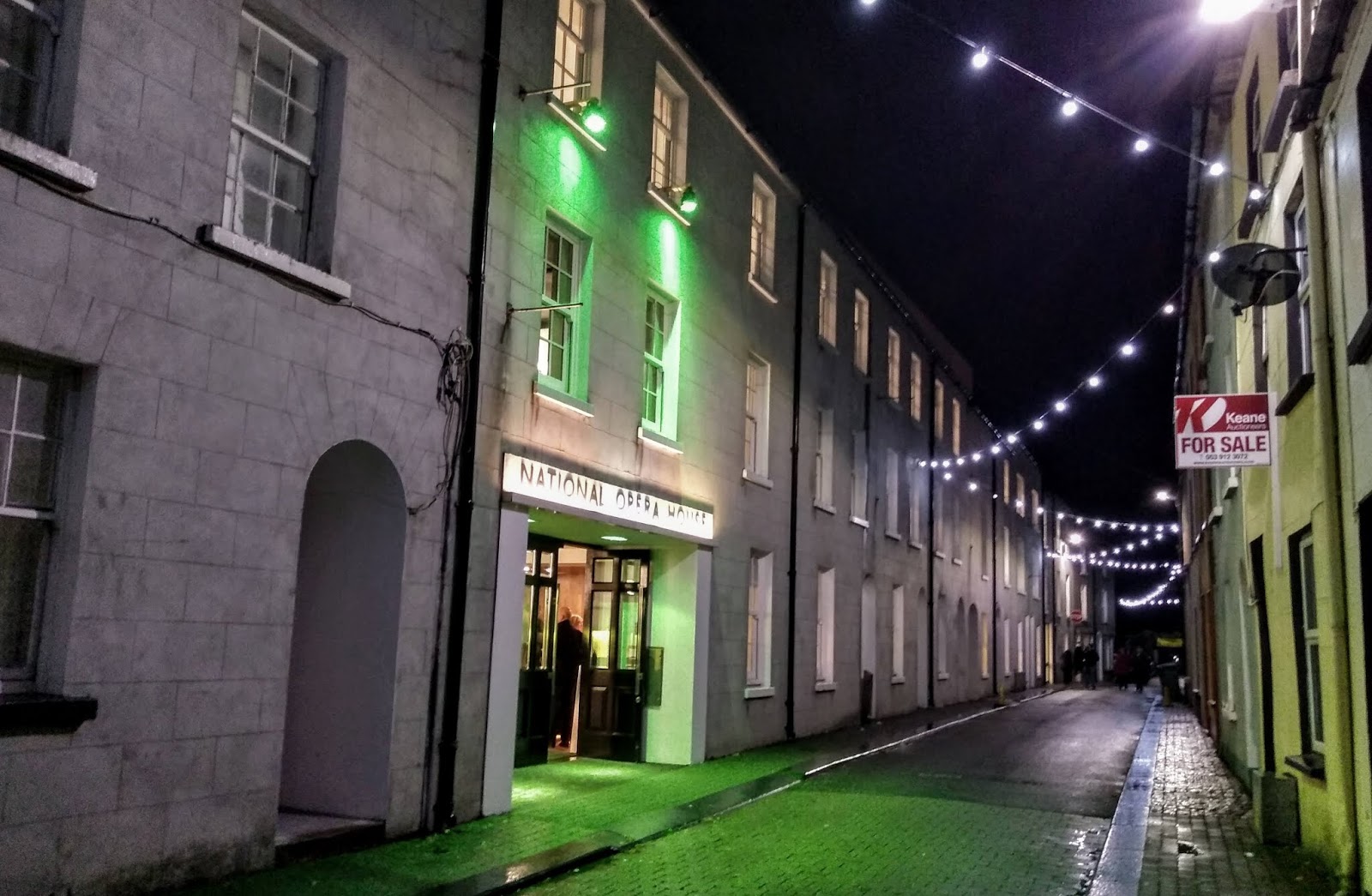
National Opera House, Wexford - 30 October 2019


For a festival that is dedicated to the rediscovery and revival of rarely performed opera there hasn't been a baroque opera performed at the Wexford Festival Opera for thirty years. True, it's a specialised genre that doesn't always appeal to modern tastes, but there are many neglected composers from this period worthy of attention and Vivaldi surely worthier than most. With a distinct flavour and character, an adventurous treatment of a Vivaldi opera is capable of overcoming the challenges of staging opera seria.

Dorilla in Tempe is recognisably classic Vivaldi right from its energised opening notes and from its reworking of music from The Four Seasons for its Spring opening sequence. We're still in the classic opera seria realm of mythology with love affairs being directed by the whim of god's and cruel twists of fate, which brings with it more than a little element of potential for spectacle and drama. Add Vivaldi's charged rhythms to that and you would think it's hard to go wrong, and yet the Wexford Festival Opera production, a co-production with La Fenice in Venice, doesn't quite manage to inject a great deal of life into the opera.


Musically however under the direction of Andrea Marchiol the percussive rhythmic sound of the period instruments of the harpsichord, theorbo and baroque cello bound out of the slightly raised pit and resound wonderfully around the theatre of the National Opera House in Wexford. There's little of the longeurs of recitative and long-winded da capo arias, Vivaldi allowing the drama to flow along without unnecessary stops and starts arias, without the formalism of elaborate entrances and exits, although there are one or two colourful divergences from the plot for the sake of pasticcio arias such as Filindo's hunting song added into the only version we have of Vivaldi's original score.

Fabio Ceresa's production doesn't have a great deal more to bring to the opera than a sense of otherworldly mythological elegance. Massimo Checchetto's set is based around an Alma-Tadema-like classical staircase which is fitting and looks bright and beautiful with its tasteful colour schemes. It's a little bit camp with some sparkly glitter costumes and attendants that for no discernible reason look like ninjas with umbrellas. There are a few touches of humour in the rather old-style special effects although they do render the monster Python a lot less menacing than he sounds in the synopsis. It suits Vivaldi's music though and the performance, picking up on the Four Seasons theme, is elegant rather than edgy and driven.


In terms of development of the plot Dorilla in Tempe is a lot easier to follow than most opera seria and not overly populated with characters with similar sounding names. You only have to work out who are boys playing girls and girls playing castrati roles, and females playing shepherd boys who are really gods, since Apollo is up to his usual tricks here disguised as the shepherd Nomio hoping to make another conquest. He's his sights set on Dorilla, daughter of Admeto, intending to take her away from her lover Elmiro. Dorilla's sister Eudamia doesn't help as she also has an eye for Elmiro, rejecting the devoted Filindo. Forced to intervene to save Dorilla from being sacrificed to appease Python, we see a better side of Apollo's nature here however, showing mercy and sorting out everyone's troubles at the conclusion. A deus ex machina ending indeed.

There's no attempt in this production to find any real world connection or contemporary updating, but rather it just tries to get the work across in the best way possible. It's not greatly imaginative but it works and is entertaining enough, certainly not the chore that baroque opera played straight can sometimes be. Vivaldi's music certainly makes it much more exciting, and anything that sounds more conventional is in the pasticcio additions from J.A. Hasse and Leonardo Leo, two other nonetheless neglected baroque composers worthy of rediscovery should Wexford decide to extend further in this direction. And with this kind of production there's no reason why not. It comes across very well in the Wexford National Opera House theatre, certainly attracted the audience to a sell-out run and the production held interest in the drama throughout what could otherwise have been a tiring three hours.


Although it kept a keen visual stimulus with an impressive set and occasional devices and humorous touches, the credit for engaging interest can probably be put down more to the excellent singing performances. Establishing distinctive costumes and looks for each of the characters certainly helped, but each performer (the majority apparently coming across from the Venice production) also made their own clear impression with skillful singing. The embattled figures inevitably fare best, not just Manuela Custer's serenely resigned Dorilla but also fiery performances from Rosa Bove as Filindo and José Maria Lo Monaco as Elmiro. Mezzo-soprano Laura Margaret Smith swanned around menacingly as Eudamia, Veronique Valdés was suitable godlike as Nomio/Apollo and Marco Bussi's rather camp Admeto nonetheless had bite when it came to discharging his sentencing over the disobedient lovers.


Links: Wexford Festival Opera, RTE Livestream

Monday, 22 May 2017

Vivaldi - Arsilda (Bratislava, 2017)

Antonio Vivaldi - Arsilda, Regina di Ponto

Slovak National Theatre, Bratislava - 2017

Václav Luks, David Radok, Lucile Richardot, Olivia Vermeulen, Kangmin Justin Kim, Fernando Guimarães, Lisandro Abadie, Lenka Máčiková

Culturebox - 9th March 2017

Composed for Venice in 1716, Vivaldi's fourth opera, Arsilda, Regina di Ponto is a typical example of the established opera seria form, a royal intrigue filled with disguises and mistaken identities that cause much confusion and turmoil in the political and romantic concerns of the kingdom. What can't be disguised however is Vivaldi's lively and vigorous approach to the music, which is vividly brought out in this performance of the opera by the Czech baroque ensemble Collegium 1704 conducted by Václav Luks in the first staged performance of the work in 300 years. It's the stripping away of disguises to the heart of the true sentiments underneath that also forms the basis for the Bratislava production directed by David Radok.

Like most early baroque operas, there is a little bit of a backstory to the considerable complications that have arisen which need to be resolved over the course of the opera. Following the death of the King of Cilicia, the Queen has managed affairs until her son Tamese is of the age to rule. A marriage has also been arranged between Tamese and Arsilda, the daughter of the King of Pontus to consolidate the throne and secure the kingdom from threats from their enemies. Unfortunately Tamese is believed drowned at sea in a shipwreck, so the Queen, needing a successor to the throne, has disguised Lisea, Tamese's twin sister, to take his place.


As the opera starts, Arsilda isn't happy that her fiancé hasn't shown much in the way of amorous intentions towards her. Since she is also being pursued by Barzane - formerly the fiancé of Lisea - this causes her some confusion and doubts about the marriage. Lisea, disguised as Tamese and feeling betrayed at Barzane's behaviour, is no less confused about how she is going to make this arrangement work. Without any plan, she puts her faith in the passing of time and unexpected events to sort things out. This is a wise policy which it has to be said is not often taken by meddling rulers in opera seria, because - you will not be surprised to find out - Lisea's twin brother Tamese is not actually dead, but alive and unaccountably employed in the court as a gardener. Not that this makes the ensuing complications any less troubling for all those involved.

Nor indeed does it make the complications any easier for the audience to figure out. Aside from the confusions over identity - which is indeed very hard to keep up with and which I'm not even going to attempt to unravel - the plot itself, the sentiments behind them and the path to resolution aren't that difficult to grasp. Basically, everyone thinks they are in love with the wrong person not knowing that they are actually the right person, but in disguise. At the same time, just to add to their woes, they don't really believe they love the person they are with, even if they can't quite figure out that the person they think they are with is not the person they think.

It sounds complicated, but all it is really illustrating is how love is never as straightforward and as simple as we might like to think it ought to be. In Arsilda, Regina di Ponto, the heart that knows its own mind and can't be denied without it resulting in much unhappiness and regret. And long arias of woe of course, although on that front Vivaldi is rather more concise and punchy in delivery, without all the endless da capo reiterations. And when you get down to the root cause of all their concerns about whether she/he (or indeed in the travesti/castrato make up of baroque opera is he/she actually a she/he?) is in love with them, it very much sets the same sense of confusion and fear about whether we will find our true love.

If you're Lisea (disguised as Tamese), you could put your faith in time and events sorting things out for themselves, but the matter is more easily resolved than that in Vivaldi's opera: everyone eventually simply removes their disguises and goes back to being who they truly are. If that's not the cleverest plot development I've ever come across in the complicated love entanglements of an opera seria, it's certainly one of the neatest, with the added benefit that everyone seems to come out of the arrangement happy. It also has a more down-to-earth quality than the clemency or wisdom of a great ruler handing down a solution, and it has the more basic universal truth of 'be yourself' within it.


If David Radok's direction and the ravishing costume designs of Zuzana Ježková don't contribute a great deal to making it clear who exactly is who they say they are and who they really are, they certainly set about illustrating that essential underlying theme. For the first two thirds or so of the opera, everyone is dressed in elaborate and somewhat stylised 18th century court costumes, with heavy wigs and considerable make-up. Gradually, each of the characters strips out of those costumes, down to rather more simple modern suits and slips as they strip themselves of their false identities and reveal their true self. Stripped of all their royal finery and away from the court intrigue they are ordinary people with everyday human feelings. It's a simple gesture, but one that neatly encapsulates everything that the opera seems to be about.

There's not a great deal of insight or elaboration that you can make out of the plot of Arsilda without unnecessarily over-complicating it further, but Vivaldi's music has its own charm that ensures that there is never a dull moment and that you don't really have to care if you haven't grasped who each of the characters are. All the more so with a riveting performance of the period instrument Collegium 1704 ensemble under Václav Luks that makes the work sound so fresh and alive. All the singing performances are also an absolute delight; Olivia Vermeulen's Arsilda is impressive, as is Fernando Guimarães's Tamese, but it's Lucile Richardot's Lisea and Kangmin Justin Kim who manage to touch more deeply on the underlying simplicity that Luks and Collegium 1704 find at the heart of Vivaldi's score, the opera ending on a reflective note of peaceful simplicity and harmony.

Monday, 16 July 2012

Vivaldi - L'Olimpiade

Antonio Vivaldi - L’Olimpiade
La Serenissima, 2012
Adrian Chandler & James Johnstone, Richard Williams, Stephen Gadd, Rachael Lloyd, Sally Bruce-Payne, Louise Poole, Marie Elliott, Mhairi Lawson, Jonathan Gunthorpe
Buxton Opera House - 11 July 2012
You might think that the Olympic games would be a perfect subject for a Vivaldi sprint, but the composer’s approach to this frequently covered libretto by Metastasio actually adopts a pace more akin to a marathon - which I suppose is an appropriate description for a lengthy opera seria. Thankfully, the directors for this Buxton Opera Festival production were better able to resist the predictable sporting cliches than myself with L’Olimpiade, all the more impressive since everyone else is tying cultural events with considerably less relevance into the London 2012 celebrations.
L’Olimpiade features the usual Metastasian setting of star-crossed lovers, unable to be with the one they love - usually on the dictate of a cruel and selfish king - their lives made even more unbearable by twists of chance, circumstance and no small amount of coincidence in work that has a convoluted backstory you need to be aware of before the opera even starts. Eventually however the king is persuaded to come to his senses and in his wisdom put everything back into the natural order, joining or reuniting the distressed lovers into the arms of their loved ones. It’s the setting of the Olympic games however that puts an interesting if somewhat notional spin on proceedings in L’Olimpiade, one of the most covered Metastasio librettos.
In the Buxton production, the set is staged as if for a wedding, but it looks like a gloomy affair that no amount of coloured balloons is going to enliven. The reluctant bride-to-be is Aristea, and the reason for her despair (despair is not too strong a word to describe the fevered outpourings expressed in typically overwrought da capo arias) is that her father, Clistene, the King of Sicione, has promised her to the winner of the Olympic games. She however is in love with the super athlete Megacle, but her father has a dislike for Atheneans, and has banished him from the kingdom. In the substantial backstory prior to the opera, Megacle has however been rescued during his exile from bandits by Licida, the son of the King of Crete. Owing his life to his new friend, Megacle agrees to enter the Olympic games under Licida’s name, unaware that the prize he is competing for on behalf of his friend is his lost love.
That’s just the simple outline, but being a Pietro Metastasio libretto, there are evidently other complications, not least of which is Argene’s despair (yes, yet more despair) that the man she loves, Licida, has abandoned her (again by regal decree, since she is not of noble birth) and now has his desires set on marrying Aristea. There’s also a situation in the past where Clistene had ordered the death of his own son - Aristea’s twin brother - after a fortune-teller warned that his son would one day attempt to kill him, but, as you can imagine, the only reason for introducing this element is to ensure a nice twist at the end when the son is revealed to be alive and actually turns out to be… well, you get the picture. Nothing remotely naturalistic, just a wonderful opera seria situation for opportunities to decry one’s woes at the cruel whims of fate in long elaborate repetitive arias.
Vivaldi’s approach to this once very popular libretto is not the typical energetic Vivaldian style, although those familiar fast-paced rhythms evidently have their place here, but the work - one of the composer’s later works from 1734 in the then fashionable Neapolitan style - is rather more varied in its efforts to suit the finer sentiments and the sorrow expressed throughout. The majority of those sentiments are delivered in solo arias or ariosos, with only a little chorus work, the variety being in the tempos and the fine melodies Vivaldi creates for them. There is one beautiful duet that stands out from this however, Act I’s ‘Ne’ giorni tuoi felice‘, between Megacle and Aristea, sung wonderfully here by Louise Poole in the castrato role of Megacle, and Rachel Lloyd as Aristea.
L’Olimpiade is a work that relies on the quality of the singers to give its improbable story some character and the singers here helped make that possible, Sally Bruce-Payne’s Argene and Stephen Gadd’s Clistene in particular standing out, but really, this was a concerted effort with the right range of voices to fit the roles. Richard Williams’ stage dressing was basic, but the choice of setting, notionally present-day, was perfect, the whole event looking like one of those wedding parties where everything kicks-off as old grievances are brought to light. Rare though they are, Vivaldi operas are notoriously difficult to stage and this set the tone perfectly and in a much more appropriate location than some sports stadium. With La Serenissima’s Adrian Chandler on violin and James Johnstone on harpsichord driving those Vivaldi rhythms on period instruments, the whole thing came together wonderfully, showing that there’s life in these old works yet.

Saturday, 26 May 2012

Vivaldi - Farnace

Antonio Vivaldi - Farnace
Opéra National du Rhin, 2012
George Petrou, Lucinda Childs, Max Emanuel Cencic, Mary Ellen Nesi, Ruxandra Donose, Carol Garcia, Vivica Genaux, Emiliano Gonzalez Toro, Juan Sancho
Strasbourg, France, 18 May 2012
Originally created in 1729 for the Teatro Sant’ Angelo in Venice, Farnace was subjected to revisions by Vivaldi in 1738 for a new production in Ferrare, the composer adapting the airs and recitative for the tessitura for the Ferrare singers, but also seeking to rework the opera in the Neapolitan ‘galant style’. The performances were however cancelled - for reasons unknown - and Vivaldi left the new version of the work unfinished after revising only the first two of the opera’s three acts. Fascinated by Vivaldi’s work on the Ferrare version, one of the last pieces of work written by the composer, and considering it worth reviving and preserving, George Petrou, along with Frédéric Delaméa and Diego Fasolis, undertook the task of continuing the revisions made by Vivaldi through to the third act, and the revised Farnace was given its first ever complete live performance (it was recorded in 2010) by the Opéra National du Rhin in Strasbourg on 18th May 2012, premiered some 274 years after it was written by Vivaldi.
The resulting work then is perhaps not musically 100% pure Vivaldi, but as a best guess interpretation of the composer’s intentions, the work has certainly been carried out with scholarly authority and it’s probably no less “authentic” than just about any interpretation of the music, style, tempo and instrumentation for most Baroque opera seria works of this period. If the first two acts were to ever be reconstructed and performed, it was however essential to either rewrite the third act or simply play the opera in its incomplete state. Simply grafting the original third act from the Venice Farnace onto the revised Ferrare version wouldn’t have worked, so small but significant modifications had to be undertaken for the sake of the singers. Directed for the stage at Strasbourg by Lucinda Childs, the validity of the new version or the power of Vivaldi’s energetic writing for the content of the opera itself was never in question, although whether the stage production managed to find an expression that was equally as successful was less certain.
Lucinda Childs is better known for her ballet creations and choreography for the US avant-garde musicians and directors who came to prominence in the 1960s - Childs most notably being involved in the Gesamkunstwerk of Philip Glass and Robert Wilson’s Einstein on the Beach. She has however increasingly been working as an opera director in recent years, although ballet inevitably plays a part in her style, and indeed in her Farnace for the Opéra National du Rhin Childs pairs each of the singers with a “double” who dances the role while the other sings. Farnace is however not an opera-ballet and Childs recognises this, so the dancing doesn’t play as large a part in the stage direction as you might imagine, but what is used is well placed and appropriate. The rhythms of Baroque music certainly lend themselves to expression in this way, helping to bring out the emotional undercurrents and turmoil of a very heated dramatic situation where Farnace, the King of Pontus, son of Mitridate, has been defeated by the Roman army under Pompeo with the aid of Berenice, his own mother-in-law. He orders his wife Tamari to commit suicide with their young son rather than be taken by the enemy, and, driven to distraction by the events that are unfolding, and gaining an opportunity through his sister Selinda sowing discord and gaining favour among the Roman military command, he attempts to assassinate Pompeo.
Childs’ direction and the use of dancers do work to an extent in getting across the dark drama that unfolds, and combined with the stage designs of Bruno de Lavenère and some interesting choreography by Childs it does prove to be an effective way of overcoming the challenge that the rather static nature of opera seria drama often presents, finding a way of getting to the heart of the characters’ inner turmoil, albeit in a fairly conventional theatrical way that isn’t particularly inspired, but shouldn’t upset traditionalists either. If it doesn’t always find a way of bringing the work to life, Vivaldi’s furiously energetic writing is fortunately more than capable of achieving the necessary impact on its own. Perhaps not enough to sustain an audience through the somewhat gruelling two hours of the first two acts, which were combined without a break, but it helps if the singing is of a high quality and, with most of the principal cast from Diego Fasolis’s 2010 recording of the Ferrare version reprising their roles onstage here at Strasbourg and the score propelled forward by the Concerto Köln under George Petrou, that at least was achieved in no uncertain terms.
The star attraction was undoubtedly the singing and performance of Max Emanuel Cencic, a countertenor with remarkable strength in this high register, much more forceful than you would normally expect to hear from this kind of singer, yet he loses none of the underlying lightness and lyricism that is required also. This was exactly the tone you would like to hear in the character of Farnace, considering the extreme range of emotions and development that he undergoes throughout the opera, and Cencic handled the flowing coloratura of the da capo arias impressively and expressively in this respect. Force was evident also in the casting of the four mezzo-soprano roles in the opera, the most commanding of which was undoubtedly Mary Ellen Nesi as the formidable Berenice, but Ruxandra Donose was also a strong, determined and driven Tamiri. Vivica Genaux was also notable as Gilade, and Carol Garcia fine as Selinda. The tenor roles of Auilo (Emiliano Gonzalez) and Pompeo (Juan Sancho) were also well performed.
The Opéra National du Rhin production at Strasbourg will be recorded for broadcast on France 3 television, and will be made available to international audiences via internet streaming on ARTE Live Web from 30th May 2012.